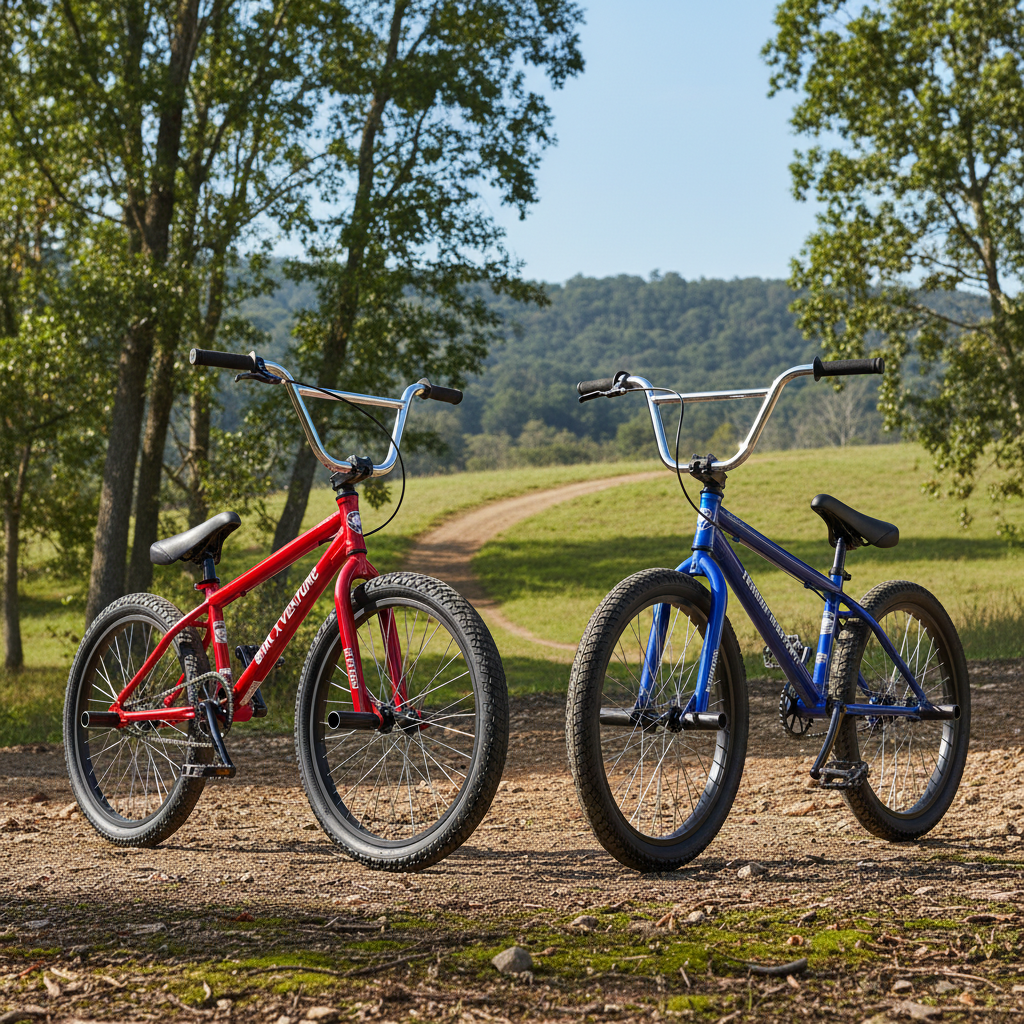
Finding good cheap bmx bikes often feels like a compromise between affordability and structural integrity. For many beginners and casual riders, the primary challenge is identifying which budget-friendly components are durable enough for street riding and which are merely decorative.
The BMX market is saturated with "toy-grade" bicycles that fail under the stress of basic jumps. However, true value is found in bikes that prioritize frame geometry and high-tensile materials over unnecessary aesthetic add-ons, allowing riders to enter the sport without risking safety or wasting capital.
By analyzing the intersection of manufacturing efficiency and material science, we can determine how to source an entry-level bike that serves as a reliable foundation for skill development. Understanding these benchmarks is essential for anyone looking to maximize their return on investment in the cycling world.

Decoding the Value Proposition of Budget BMX Bicycles

The term "cheap" in the bicycle industry often carries a negative connotation, implying fragility. However, the emergence of streamlined manufacturing allows for the production of bikes that are affordable yet technically sound. The value proposition lies in removing non-essential features—such as high-end anodized coatings or professional-grade lightweight alloys—while maintaining the core structural requirements of a BMX frame.
For the consumer, the goal is not to find the lowest price possible, but the lowest price that still supports the physical demands of the sport. This requires a shift in perspective from "lowest cost" to "best cost-to-durability ratio." A bike that costs 20% more but lasts three times longer is the actual "cheap" option over the long term.
Industry standards for entry-level bikes have evolved, moving away from heavy, poorly welded steel toward more consistent high-carbon steel and refined magnesium alloy constructions. This evolution ensures that budget riders can experience the thrill of the sport without the immediate need for expensive repairs or frame replacements.
Critical Specifications That Define a Durable Entry-Level Bike
When evaluating a budget BMX, the frame is the non-negotiable element. High-carbon steel remains the gold standard for budget durability because of its ability to absorb impact without permanent deformation. In contrast, some ultra-cheap models use low-grade alloys that are prone to cracking under stress, making the material choice a primary indicator of quality.
Beyond the frame, the drivetrain and braking systems determine the daily usability. For a bike to be considered "good" despite a low price point, it should feature reliable disc brakes for consistent stopping power and a sealed middle bracket to protect against dust and moisture. These details reduce the frequency of maintenance, which is a hidden cost of cheap equipment.
Wheel integrity is another critical factor. Aluminum alloy rims are preferred over basic steel because they offer a better balance of weight and strength. When paired with high-performance tires that provide adequate grip, a budget bike can perform competitively in urban environments, bridging the gap between toy and tool.
Practical Application Scenarios for Affordable BMX Models
Affordable BMX bikes are ideally suited for several distinct user profiles. For the "curious beginner," these bikes provide a low-risk entry point to determine if the sport fits their lifestyle. In this scenario, the bike is used for basic balance drills, low-altitude hops, and urban commuting, where the extreme stress of professional competition is absent.
In urban environments, budget BMX bikes serve as efficient short-distance transport. Their compact geometry makes them easier to maneuver through crowds and store in small apartments compared to traditional city bikes. The robustness of a basic BMX frame allows it to handle the rough surfaces of city streets—such as potholes and curbs—better than a fragile road bike.
Furthermore, these models are frequently utilized in educational or community programs where multiple bikes are needed for children. The focus in these settings is on basic mobility and introductory trick-learning, where the durability of the frame is more important than the precision of high-end components. This makes highly customized, factory-direct models a preferred choice for large-scale procurement.
Evaluating Performance Benchmarks Across Budget Tiers
To quantitatively understand the difference between "cheap" and "good cheap," we look at performance metrics such as frame rigidity, component lifespan, and weight distribution. A bike that adheres to professional geometry while using cost-effective materials will outperform a poorly designed bike regardless of the brand name.
The following data illustrates how optimized budget bikes compare to generic industry benchmarks in terms of operational reliability and user satisfaction across five key dimensions.
good cheap bmx bikes Performance Metrics
The data suggests that while budget bikes may not reach the 90%+ efficiency of professional carbon-fiber models, they can significantly exceed the performance of generic "big-box store" bikes by focusing on the right materials, such as magnesium alloys and high-carbon steel.
Strategic Procurement Considerations for First-Time Buyers
Purchasing a budget BMX requires a disciplined approach to avoid "hidden costs." The most common mistake is prioritizing a low initial price over the cost of ownership. For instance, a bike with non-replaceable parts or proprietary sizing will force the user to replace the entire unit once a single component fails.
Buyers should investigate the manufacturer's capabilities. A company that owns its full production chain—including the paint and frame departments—can typically offer higher quality control at a lower price than a brand that simply assembles third-party parts. This vertical integration is key to finding a bike that is both affordable and reliable.
Additionally, consideration should be given to the shipping and assembly options. SKD (Semi-Knocked Down) options can reduce shipping costs, but buyers must ensure they have the tools and knowledge to assemble the bike correctly to avoid compromising the structural integrity of the components.
Material Innovations Shaping the Future of Affordable Bikes
The boundary between professional and budget bikes is blurring due to the adoption of magnesium alloy frames. These materials provide a weight-to-strength ratio that was previously only available in expensive high-end models. By utilizing one-piece construction devoid of welding marks, manufacturers can enhance both the aesthetic appeal and the structural integrity of the bike.
We are also seeing a trend toward more durable, low-cost components like sealed middle brackets and high-performance Chaoyang tires. These additions protect the bike from the elements and reduce the need for frequent replacements, effectively lowering the total cost of ownership for the budget-conscious rider.
Future developments are likely to focus on further refining the ergonomics of budget bikes, such as implementing aluminum alloy seat tubes for better customization of riding posture. As these professional-grade details become standard in affordable models, the performance gap between "cheap" and "premium" bikes will continue to shrink.
Decision Guide for Selecting the Right Budget Model
Choosing the right bike depends on the intended use case and the user's physical requirements. Not all "cheap" bikes are created equal; some are designed for stability and cruising, while others are engineered for basic stunt work. The following table provides a comparison of different budget-tier approaches.
By matching the technical approach to the specific application, buyers can avoid overpaying for features they won't use or under-buying a bike that will break within the first month of use.
| Model Category | Primary Material | Best Use Case | Durability Factor |
|---|---|---|---|
| Urban Entry | High Carbon Steel | City Commuting | High Impact Resistance |
| Junior Performance | Magnesium Alloy | Learning Basics | Low Weight / High Rigidity |
| Street Beginner | Reinforced Steel | Low-Level Jumps | Maximum Frame Strength |
| Casual Cruiser | Standard Alloy | Park Riding | Comfort and Balance |
| Custom Budget | Mixed Alloy | Specific Needs | Modular Upgradability |
| Fleet Model | High Carbon Steel | School Programs | High Maintenance Cycle |
Ultimately, the best choice is one that provides a secure and responsive riding experience while remaining within a sustainable budget. Those evaluating these options can review detailed product specifications and company capabilities through www.pengchibike.com.
Frequently Asked Questions
Conclusion
Acquiring a high-quality, affordable BMX bike is not about finding the cheapest price, but about identifying the best technical value. By focusing on frame materials like high-carbon steel and magnesium alloy, and ensuring that critical components like the braking system and middle bracket are robust, riders can secure a bike that is both safe and durable.
As manufacturing processes continue to optimize, the accessibility of performance-oriented cycling increases. Whether you are a parent buying for a child or an adult entering the sport, prioritize the structural foundation of the bicycle. For those seeking reliable manufacturing partners and professional-grade budget options, further information is available at www.pengchibike.com.